
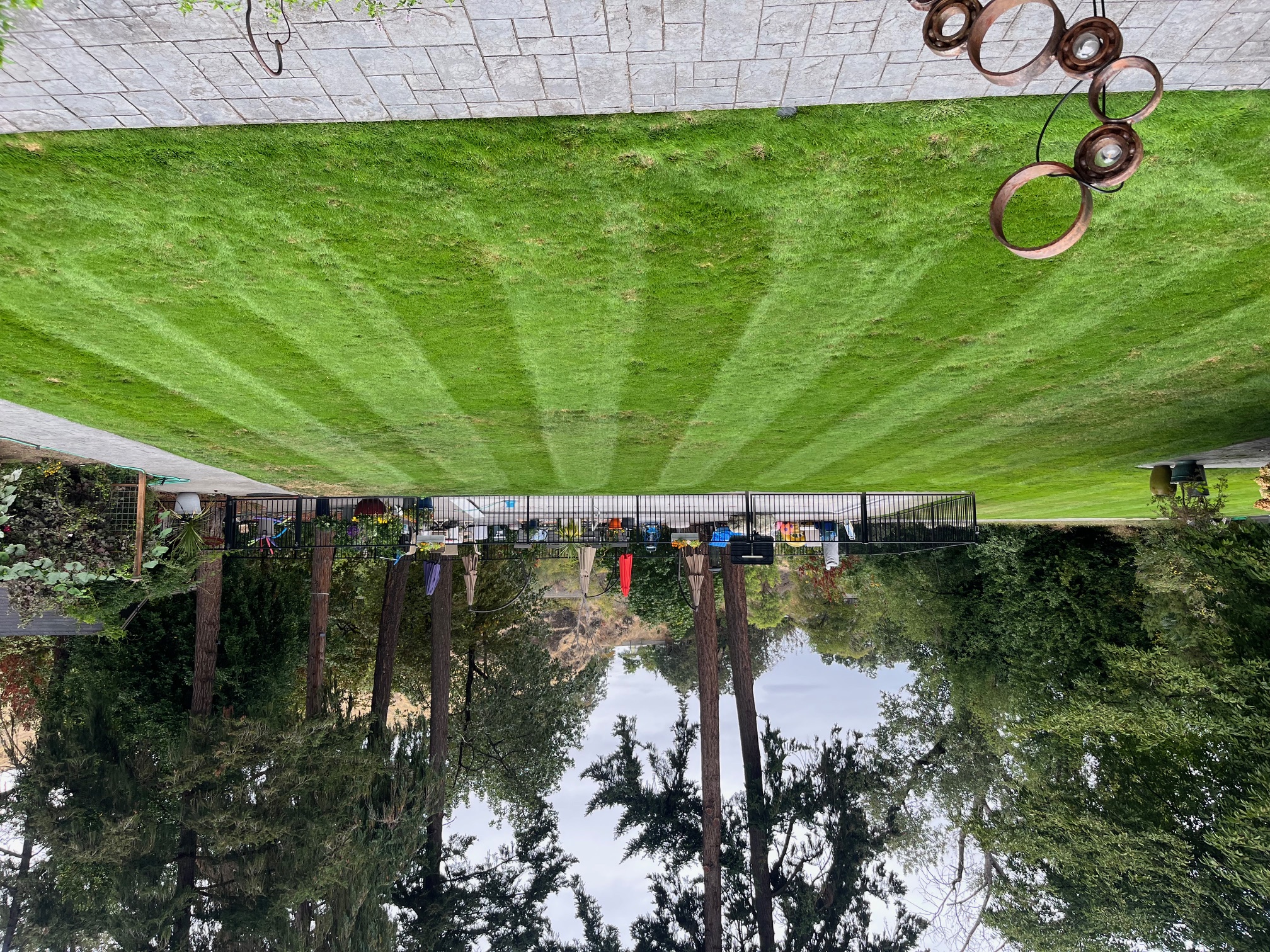
If your Roseburg lawn looks tired despite regular mowing and watering, soil compaction may be the hidden culprit. Over time, foot traffic, heavy equipment, and the natural weight of wet Oregon soil press soil particles together, creating a dense layer that roots, water, and air can't penetrate. The result: thin, struggling grass that no amount of surface-level care can fully fix.
Core aeration is the most effective solution — and timing it correctly for Roseburg's climate makes all the difference between a lawn that rebounds dramatically and one that just muddles through. This guide covers everything you need to know.
What Is Core Aeration?
Core aeration uses a machine called a core aerator (or plug aerator) to mechanically remove small cylindrical plugs of soil from the lawn. These plugs — typically about the diameter of a finger and 2–3 inches deep — are pulled at regular intervals across the entire lawn surface and left to dry on top of the grass, where they break down and return organic matter to the soil over several weeks.
The holes left behind serve multiple purposes. They allow air, water, and nutrients to penetrate directly to the root zone. They relieve the pressure of compacted soil, giving roots room to grow deeper. And when overseeding follows immediately after, they provide near-perfect seed-to-soil contact — the single most important factor in successful grass establishment.
Note that core aeration is different from spike aeration, which uses solid tines to poke holes without removing soil. Spike aeration can actually worsen compaction around the holes and is generally not recommended as a substitute for core aeration.
Signs Your Lawn Needs Aeration
Not every lawn needs annual aeration, but certain conditions indicate compaction is a limiting factor:
- Water pools on the surface after rain or irrigation rather than soaking in quickly. This indicates the top few inches of soil can't absorb moisture fast enough.
- Hard soil. Push a screwdriver or pencil into the lawn. If you can't easily penetrate 2–3 inches, the soil is compacted.
- Thin grass despite regular care. If fertilizing, watering, and mowing correctly still results in sparse turf, compaction is likely limiting root development.
- Thatch over half an inch thick. Pull back a small section of turf. A spongy layer between the soil and grass blades exceeding a half-inch suggests thatch buildup that aeration can help manage.
- Heavy foot traffic areas. Paths across the lawn, play areas, and frequently used access routes compact faster than the rest of the yard.
- Clay-heavy soil. Much of Douglas County has clay-rich soil that compacts more readily than sandy or loamy alternatives. If your soil is sticky and dense when wet and cracks when dry, you have clay — and you probably need annual aeration.
The Best Time to Aerate in Roseburg, Oregon
For cool-season lawns (tall fescue, perennial ryegrass, Kentucky bluegrass) — which describes the vast majority of Roseburg area lawns — fall is the ideal time to aerate.
Here's why fall works so well in the Umpqua Valley:
- Active grass growth. Cool-season grasses grow most vigorously in the 60–75°F temperature range, which September and October deliver reliably in Roseburg. Actively growing turf recovers faster from the stress of aeration and fills in disturbed areas more quickly.
- Returning rain. After Roseburg's dry summer, fall rains return just as the growing season peaks. New seed benefits from consistent natural moisture without the homeowner needing to run irrigation constantly.
- Weed competition is lower. Annual summer weeds like crabgrass are dying off in fall, reducing competition for newly seeded grass. This is also why fall overseeding consistently outperforms spring overseeding in establishment rate.
- Root storage before winter. Aeration improves the root system's ability to absorb nutrients and store energy reserves before dormancy — reserves that power a faster, more vigorous green-up next spring.
Target window: mid-September through the end of October. Soil should still be warm enough to support germination (above 50°F ground temperature) but air temperatures should be consistently below 80°F.
What About Spring Aeration?
Spring aeration — typically March through April in Roseburg — is a valid option, especially for lawns with severe compaction that need immediate relief. However, spring aeration has some drawbacks compared to fall:
- Pre-emergent herbicide applications, which are often recommended in spring to prevent crabgrass, can't be combined with overseeding. If you aerate and overseed in spring, you'll likely have more weed pressure that season.
- Summer heat follows quickly after spring establishment, stressing new seedlings before their root systems are deep enough to handle drought.
- Cool-season grass growth is less vigorous in spring than in fall, meaning recovery is slower.
Our recommendation for most Roseburg lawns: prioritize fall aeration with overseeding. If compaction is severe and you want to address it sooner, a spring aeration without overseeding (or with limited spot overseeding) can be a useful complement to the fall program.
Combining Aeration with Overseeding for Maximum Impact
Aeration and overseeding are almost always done together, and for good reason. The holes created by core aeration are essentially miniature seedbeds — they provide the seed-to-soil contact that's nearly impossible to achieve by simply broadcasting seed over an established lawn. Without aeration, most seed lands on thatch or existing grass, where it may germinate but rarely establishes robust roots.
Immediately after aeration, we broadcast premium turf-type seed across the surface and into the holes. We then apply a starter fertilizer high in phosphorus to support root development in the new seedlings. The combination of properly timed aeration, quality seed, and the right nutrition consistently produces the most dramatic lawn transformations we see all year.
Aftercare: How to Help Your Lawn Recover
Success after aeration and overseeding depends on what happens in the weeks following service:
- Water lightly and frequently. Keep the top inch of soil consistently moist (not soggy) for the first 3–4 weeks. Short watering cycles 2–3 times daily are better than one long soak.
- Stay off the lawn. Minimize foot traffic while new seed is germinating and seedlings are establishing.
- Don't mow until seedlings reach 3.5–4 inches. Typically 3–4 weeks after seeding. Mow high for the first few cuts.
- Avoid herbicides for 8 weeks. Pre-emergent and post-emergent herbicides can prevent germination or kill young seedlings.
- Don't panic about the plugs. The soil cores left on the lawn surface look messy for a couple of weeks but break down quickly with rain and mowing. They're beneficial, not harmful.
How Often Should You Aerate?
Most Roseburg lawns benefit from annual aeration, particularly if they have clay-heavy soil, heavy use, or recurring thin spots. For lawns with lighter soil in good condition, every other year may be sufficient. High-traffic commercial properties or athletic fields may benefit from twice-yearly aeration to maintain open, healthy soil structure year-round.
A simple test: if you can push a screwdriver 3 inches into moist lawn soil with minimal resistance, the soil is in good condition and may not need immediate aeration. If it takes effort, it's time to schedule service.
Schedule Aeration & Seeding with Peridot Landscaping
Peridot Landscaping provides professional core aeration and overseeding for residential and commercial properties throughout Roseburg, Sutherlin, Myrtle Creek, and Douglas County. We time our service to the fall window that produces the best results, and we follow up with starter fertilizer and detailed aftercare instructions with every job.
Ready to give your lawn the fresh start it deserves? Book online for a free estimate or call us at (541) 580-1678.
Frequently Asked Questions
Fall (September through October) is the best time to aerate lawns in Roseburg. Cooler temperatures, returning moisture, and active cool-season grass growth create ideal conditions for both soil relief and seed establishment. Spring (March–April) is the second-best window for heavily compacted lawns.
Most Roseburg lawns benefit from annual aeration, especially those with clay-heavy soil, heavy foot traffic, or persistent thin spots. Lawns with lighter sandy soil in good condition can be aerated every 2 years. High-use commercial or athletic lawns may benefit from twice-yearly aeration.
Rental core aerators are available, but professional aeration ensures proper tine depth, adequate plug spacing, and correct soil moisture conditions at service time. A professional also ensures aeration holes are flagged around irrigation heads and other obstacles, and can immediately follow up with quality overseeding and fertilizer application.