
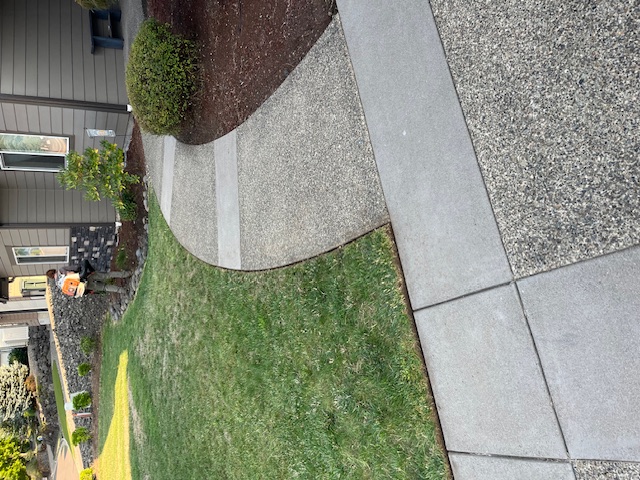
One of the most common questions we hear from Roseburg homeowners is how often they should be mowing. The honest answer: it depends on the season, your grass type, recent rainfall, and how fast the lawn is actively growing. But there are clear patterns for western Oregon's climate that take most of the guesswork out of it.
Get the frequency right and mowing becomes one of the best things you do for your lawn — stimulating dense, healthy growth and reducing weed pressure. Get it wrong and you're either scalping the grass and stressing it, or letting it go too long and causing an overgrown mess. Here's the complete seasonal guide for Roseburg-area lawns.
The One-Third Rule: The Most Important Mowing Principle
Before diving into the seasonal schedule, there's one rule that governs everything else: never remove more than one-third of the grass blade in a single mowing.
This isn't just a preference — it's rooted in how grass plants work. Each blade is a solar panel, capturing sunlight to fuel root development. When you remove too much at once, you shock the plant, force it to use stored energy reserves to rebuild leaf area, and temporarily halt root growth. A lawn that's regularly scalped or cut too aggressively develops shallow, weak roots that struggle with heat and drought.
In practice, this means if your lawn is at 4.5 inches, you can safely cut it to 3 inches. If it grew to 6 inches because you skipped a couple of mows, cut it to 4 inches first, then come back a few days later to bring it down further.
Seasonal Mowing Guide for Roseburg, Oregon
Spring (March – June): Weekly or More
Spring is the busiest season for lawn care in Douglas County. Oregon's cool-season grasses — tall fescue, perennial ryegrass, Kentucky bluegrass — are optimized for the 60–75°F temperatures that March through June reliably delivers, and they grow fast. Add the region's spring rainfall and lawns can easily put on 1–2 inches of new growth per week.
During peak spring growth, weekly mowing is the minimum for most Roseburg lawns. Some properties with fast-growing ryegrass or recently fertilized turf may need mowing every 5 to 6 days to stay within the one-third rule. Letting the lawn get away from you in spring sets up problems for the rest of the year: overgrown grass is harder to mow cleanly, produces excessive clippings, and tends to develop thatch buildup faster.
Spring is also when you should check your mower blade and ensure it's sharp. A dull blade tears grass instead of cutting it cleanly, leaving ragged white tips that turn the lawn a dull, brownish color and create entry points for disease.
Summer (July – August): Every 10–14 Days
Roseburg summers are warm and dry. July and August average high temperatures in the upper 80s to low 90s°F, and natural rainfall essentially stops. Cool-season grasses respond to this heat and drought by slowing growth significantly — they're entering a semi-dormant, stress-conserving mode.
During summer, most Roseburg lawns only need mowing every 10 to 14 days, sometimes longer if the lawn has gone partially dormant. Resist the urge to mow on a strict weekly schedule when growth has slowed — unnecessary mowing removes leaf area the grass needs to support itself during stress.
Summer is also when mowing height matters most. Raise your mower to 3.5–4 inches for summer cuts. Taller grass shades the soil, dramatically reducing surface moisture evaporation, keeping roots cooler, and reducing weed germination space. A scalped summer lawn turns brown, invites weeds, and is slow to recover when fall rains return.
Avoid mowing during the hottest part of the day. Morning (after dew has dried) or evening mowing is easier on the grass. Never mow a drought-stressed lawn that hasn't been watered recently — you're adding stress on top of stress.
Fall (September – November): Weekly
Fall is the second spring for Oregon lawns. As temperatures moderate back into the 60s and 70s and October rains begin, cool-season grasses snap out of summer semi-dormancy and enter another strong growth period. Weekly mowing returns to the schedule and stays there through most of November.
Fall is also when leaves enter the picture. Don't let a thick layer of leaves sit on the lawn — it blocks light and air circulation, creating conditions for disease and moss. Mow frequently enough to mulch fallen leaves into small pieces, or rake and remove heavy leaf accumulations.
In November, you can gradually lower your mowing height slightly (to around 2.75–3 inches) for the last couple of cuts. Slightly shorter grass going into winter helps prevent matting and snow mold in areas that experience frost. Don't go below 2.5 inches — you still want enough leaf area to photosynthesize on mild winter days.
Winter (December – February): As Needed
Western Oregon winters are mild enough that grass rarely goes fully dormant. Growth slows dramatically but doesn't stop. Most Roseburg lawns only need one or two mows during the entire winter period — typically during mild stretches in January or February when growth picks up temporarily.
Don't mow frozen grass — the blades are brittle and break rather than cut, causing significant damage. Wait until the frost has melted and the soil is firm enough that the mower won't leave deep ruts. If in doubt, skip the mow and come back in a week when conditions are better.
Recommended Mowing Heights by Grass Type
The ideal mowing height depends on your grass species:
- Tall Fescue: 3–4 inches (most common in Roseburg residential lawns)
- Perennial Ryegrass: 2.5–3.5 inches
- Kentucky Bluegrass: 2.5–3.5 inches
- Fine Fescues: 2.5–3.5 inches
Not sure what grass type you have? If your lawn was seeded rather than sodded, it's likely a blend of the above varieties. When in doubt, keep it at 3–3.5 inches and you'll be safe for any cool-season mix.
Should You Bag or Mulch Clippings?
Mulching — leaving finely chopped clippings on the lawn — is the better choice for most Roseburg lawns when mowed at the right frequency. Clippings are roughly 80% water and break down quickly, returning nitrogen and organic matter to the soil. A lawn regularly mulch-mowed can get up to 25% of its annual nitrogen requirement from returned clippings alone.
When to bag instead: mow when the lawn has gotten too long (clippings will be thick and matting), when grass is wet and clippings are clumping, or if there's an active disease issue. Diseased clippings should be bagged and removed, not mulched back into the lawn.
Mowing Direction: Does It Matter?
Yes. Mowing in the same direction every time causes grass to lean in that direction and can create ruts from the mower wheels. Varying your mowing pattern — alternating between horizontal, vertical, and diagonal passes — keeps grass growing more upright and reduces soil compaction in wheel tracks. For most homeowners, simply alternating the direction of each mow is enough to see the benefit.
When to Call a Professional
Many Roseburg homeowners handle their own mowing but struggle to stay consistent during spring's rapid growth period or find summer's heat discouraging. A professional mowing service means your lawn gets cut on the right schedule with sharp blades, the correct height, and varied patterns every visit. No missed weeks, no scalped spots, no guesswork.
Peridot Landscaping offers recurring mowing services for residential and commercial properties throughout Roseburg, Sutherlin, Myrtle Creek, and Douglas County. Book online for a free estimate or call (541) 580-1678 to discuss your lawn's needs.
Frequently Asked Questions
In Roseburg, mow weekly during peak spring growth (March–June) and fall (September–November). Reduce to every 10–14 days during summer when growth slows. In winter, mow only as needed — typically once or twice during mild stretches.
Keep cool-season grasses at 3–4 inches year-round, raising slightly in summer to shade soil and conserve moisture. Never remove more than one-third of the blade length in a single mowing. Taller grass produces deeper roots and is more resistant to heat, drought, and weeds.
Mulching is generally better — it returns nitrogen and organic matter to the soil. Bag when grass is overly long, wet, or diseased. Mulched clippings from properly maintained lawns break down quickly and do not cause thatch buildup.