
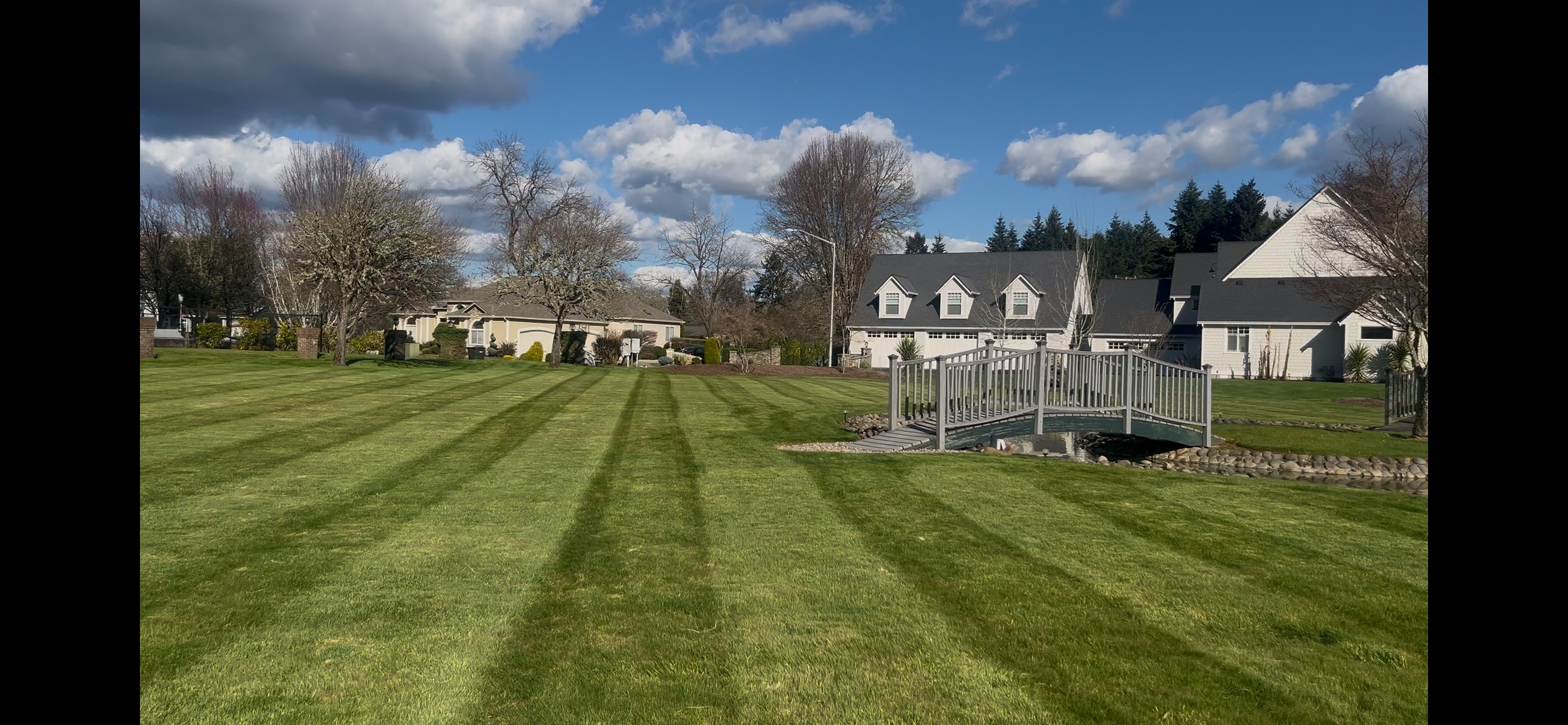
Douglas County has a climate that's genuinely ideal for growing lush, green lawns. The Umpqua Valley's mild winters, warm summers, and moderate rainfall create excellent conditions for cool-season grasses — if you know how to work with the local conditions rather than against them.
Generic lawn care advice from national sources often misses the mark for Roseburg-area homeowners. The timing, techniques, and products that work in the Midwest or the Southeast may not apply here. These five tips are specifically calibrated to what we see working (and not working) in Douglas County lawns every year.
Tip 1: Mow High — Higher Than You Think
The single most common mistake we see in Douglas County lawns is cutting grass too short. Many homeowners cut to 1.5–2 inches because it looks clean and tidy immediately after mowing. In reality, this is one of the most damaging things you can do to a cool-season lawn.
For tall fescue, perennial ryegrass, and bluegrass — the grasses that make up most Roseburg lawns — the recommended mowing height is 3 to 4 inches. Here's why this matters in our climate specifically:
- Drought resistance. Roseburg summers are dry. Taller grass shades the soil surface, reducing evaporation and keeping root zones cooler. Lawns cut at 3–4 inches consistently outperform shorter lawns during our July–August dry stretch without additional irrigation.
- Weed suppression. Taller, denser grass leaves no room for weed seeds to germinate and establish. Short lawns, by contrast, let sunlight reach the soil — which is exactly what annual weeds like crabgrass need to sprout.
- Root depth. Leaf length and root depth are directly correlated in grasses. A 3-inch lawn has roots roughly 3 inches deep; a 1.5-inch lawn has shallow roots that struggle to access moisture during dry periods.
Set your mower to the highest or second-highest setting. It may look a bit longer than you're used to for the first couple of mows, but your lawn will green up deeper and handle summer heat dramatically better.
Tip 2: Time Your Fall Fertilizer Application Carefully
Of the 3–4 fertilizer applications Roseburg lawns benefit from each year, the fall application is the most important and the most often mistimed.
Fall fertilizing should happen when grass is still actively growing but air temperatures have moderated — roughly mid-September through mid-October in Douglas County. This is when cool-season grasses are storing carbohydrates in their root systems for winter, and a potassium-enriched fertilizer applied during this window strengthens the root reserves that will power spring green-up months later.
What homeowners often get wrong: applying fall fertilizer too early (August, when summer heat is still stressing the lawn) or too late (November, when growth has slowed too much to use the nutrients effectively). Both result in largely wasted fertilizer and a lawn that misses the full benefit of fall feeding.
Look for a "winterizer" or fall-formula fertilizer with a high potassium (K) number relative to nitrogen. Apply it when daytime highs are consistently in the 60s–70s°F and the lawn is still green and growing.
Tip 3: Aerate Every Fall (Yes, Every Year)
Douglas County's soils are notoriously clay-heavy. Clay soils pack tightly under the weight of foot traffic and the cycling of wet and dry seasons, creating compaction that restricts root growth, reduces drainage, and weakens turf over time.
Annual core aeration is the most effective way to combat this. By removing small plugs of soil from across the entire lawn each fall, aeration relieves compaction, improves water and nutrient penetration, and creates an ideal environment for overseeding to fill in thin or bare areas.
The temptation is to skip aeration years when the lawn "looks fine." Resist this. Compaction builds gradually and its effects on root depth and turf density are cumulative. Lawns that are aerated annually consistently look better, recover faster from summer stress, and require less irrigation than lawns that go 2–3 years between aerations.
Combine fall aeration with overseeding and starter fertilizer for the most dramatic and lasting results. Fall's combination of warm soil, cooler air, and returning rain creates near-perfect seed establishment conditions.
Tip 4: Apply Pre-Emergent in Late February or Early March
Crabgrass and other annual weeds are managed most effectively by preventing them from sprouting, not by killing them after they're established. Pre-emergent herbicides create a chemical barrier in the soil that prevents weed seeds from germinating — but they only work if applied before the seeds sprout.
In Roseburg, crabgrass typically begins germinating when soil temperatures reach 50°F at the 2-inch depth. That threshold is usually crossed in early to mid-March. Pre-emergent applications need to go down before that threshold — which means late February to early March in Douglas County.
A few important caveats:
- Pre-emergent herbicides also prevent grass seed from germinating. Don't apply them within 8 weeks of overseeding, and don't overseed within 8 weeks of a pre-emergent application.
- Pre-emergent applications in fall (late August) can target annual bluegrass (Poa annua), which germinates in fall and winter. Two-season pre-emergent applications dramatically reduce the overall weed seed bank in your soil over time.
- Pre-emergent doesn't address existing weeds — those require post-emergent treatments.
Mark your calendar now: late February is pre-emergent time in Douglas County. It's one of the most impactful things you can do for your lawn's appearance all season.
Tip 5: Water Deeply and Infrequently in Summer
Oregon homeowners who are used to near-constant natural rainfall often struggle with summer irrigation. When the rains stop in June, many lawns suffer not from too little watering, but from the wrong kind of watering.
Light, frequent watering — a few minutes every day or every other day — keeps only the top inch of soil moist. Grass roots concentrate in this shallow zone, making the lawn extremely vulnerable to heat and drought. When irrigation misses a day during a heat wave, these shallow-rooted lawns go from green to brown almost overnight.
The right approach: water deeply and infrequently. Apply enough water to soak the soil 4–6 inches deep (roughly 1 inch of water total), then allow the top inch or two to dry out before watering again. This cycle forces roots to grow deeper in search of moisture, creating the drought resilience that shallow watering can never achieve.
In practical terms: most Roseburg lawns during summer need about 1 inch of water per week, delivered in 2–3 sessions rather than daily light sprinkles. Water in the early morning (5–9 AM) to minimize evaporation and allow foliage to dry before evening, which reduces disease pressure.
If your lawn goes partially dormant (turns tan) during a severe summer dry stretch without irrigation, don't panic. Cool-season grasses are designed for this and will green up quickly when fall rains or irrigation returns. Applying limited water to keep dormant grass barely alive is often better than no water at all during extreme heat, but full irrigation can wait until cooler conditions allow efficient recovery.
The Bottom Line
Douglas County has everything it takes for beautiful, low-maintenance lawns — but the local climate demands attention to timing and technique. Mow high, fertilize in fall, aerate annually, apply pre-emergent in late winter, and water deeply rather than shallowly. Get these five fundamentals right and your lawn will reward you with consistently better results than your neighbors who are working harder with less to show for it.
Of course, if you'd rather have someone else handle the details, Peridot Landscaping offers full-service lawn maintenance programs for Roseburg and Douglas County homes and businesses. Book a free estimate online or call us at (541) 580-1678.
Frequently Asked Questions
Turf-type tall fescue is the best all-around choice for most Roseburg lawns — drought-tolerant, deep-rooted, and resilient through summer dry periods. Perennial ryegrass is often blended in for faster germination and finer texture. Kentucky bluegrass works well in shadier areas and self-repairs via underground rhizomes.
Possibly, but not always. Moss is a symptom of multiple conditions: low soil pH (which lime corrects), shade, poor drainage, compaction, and thin turf. A soil test will tell you if low pH is contributing. Even if lime is warranted, lasting moss control also requires addressing drainage, increasing light, and thickening the lawn through aeration and overseeding.
Water in the early morning (5–9 AM) when temperatures are cool and winds calm, minimizing evaporation and allowing grass to dry before evening. Aim for 1 inch of water per week in summer, delivered in 2–3 deep sessions rather than daily light sprinkles. Deep, infrequent watering builds deeper, drought-resistant roots.
Tip 6: Dethatch Before It Becomes a Problem
Thatch is the layer of partially decomposed grass stems, roots, and organic matter that accumulates between the soil surface and the base of the living grass blades. A thin layer — up to about a quarter inch — is normal and even beneficial, helping moderate soil temperature and retain moisture. But when thatch exceeds half an inch, it becomes a barrier that prevents water, fertilizer, and air from reaching the root zone.
Douglas County lawns are prone to thatch buildup because our wet-dry seasonal cycle slows the microbial decomposition that normally breaks down organic matter. Lawns that are heavily fertilized with nitrogen-rich products, watered frequently, or never aerated are especially susceptible.
Signs your lawn has a thatch problem: the surface feels spongy when you walk on it; water beads and runs off rather than soaking in; the lawn looks dull or weak despite adequate fertilizing and mowing. To check, pull back a small section of turf and look for the layer between the soil and green grass. If it's more than half an inch thick and feels fibrous, it's time to dethatch.
Dethatching is best done in fall, ideally paired with aeration and overseeding. A vertical mower (or power rake) cuts through the thatch layer and pulls it to the surface for removal. The process looks aggressive but cool-season grasses recover quickly in fall conditions. Following up with aeration, seed, and starter fertilizer immediately after dethatching produces dramatically improved results compared to either practice alone.
Tip 7: Follow a Seasonal Lawn Care Schedule
One of the biggest differences between lawns that consistently look great and those that never quite get there is whether the owner is working to a schedule or reacting to problems as they arise. A proactive seasonal approach means inputs arrive when grass can actually use them — and problems are prevented rather than treated.
Here's a practical seasonal framework for Douglas County lawns:
- Late February – Early March: Apply pre-emergent herbicide before soil temps hit 50°F. This is the single most impactful weed prevention step you can take all year.
- March – April: Apply a balanced fertilizer (or nitrogen-heavy) as lawns green up. Mow at 3–4 inches. Address any persistent bare spots with overseeding if pre-emergent wasn't applied.
- May – June: Transition to summer mowing schedule (every 7–10 days). Apply post-emergent treatments for any escaped weeds. Begin supplemental irrigation as rains taper off.
- July – August: Water deeply 2–3 times per week. Avoid fertilizing during peak summer heat. Mow high (4 inches) to protect roots from heat stress. Allow partial dormancy if desired rather than over-irrigating.
- September – October: Core aerate and overseed in early fall. Apply winterizer fertilizer when daytime highs drop into the 60s–70s°F. This is the most important and highest-impact window of the entire lawn care year.
- November – February: Mow as needed when growth continues during mild spells. Avoid heavy traffic on frozen or saturated soil. Treat moss with iron-sulfate products if it's actively spreading.
Print this schedule, put it somewhere you'll see it, and set calendar reminders for the critical windows. The pre-emergent application and fall aeration/fertilizing windows are especially time-sensitive — missing them by even a few weeks can mean waiting another full year for the next opportunity.
Tip 8: Water Smarter, Not Just More
Oregon homeowners sometimes assume that because the state is known for rainfall, lawn watering should be simple. In reality, the long summer dry season that Douglas County experiences each year — often with no significant rain from mid-June through September — makes irrigation management one of the most consequential skills a Roseburg homeowner can develop.
The most common watering mistakes we see on Douglas County properties:
- Watering too frequently and too shallowly. Short daily cycles keep only the top inch of soil moist, training roots to stay near the surface. This creates a lawn that wilts within days of irrigation being interrupted. The fix: water less often but long enough each time to wet the soil 4–6 inches deep.
- Watering in the evening. Grass left wet overnight is far more susceptible to fungal diseases like brown patch and dollar spot. Water in the early morning (before 9 AM) to allow foliage to dry through the day.
- Ignoring irrigation system coverage gaps. Sprinkler systems often have dry spots — areas where heads don't overlap adequately, where pressure drops cause reduced throw, or where slopes cause runoff before water can soak in. Walk your system once per season with it running and check for dry areas or over-saturated spots.
- Not adjusting for weather. A smart irrigation controller with a rain sensor or ET (evapotranspiration) adjustment prevents your system from running during and after rain events. If you don't have a rain sensor, make it a habit to check the forecast before your system's scheduled run days.
The goal is roots that extend 4–6 inches deep — deep enough to access moisture stored in the soil between watering events. Achieving this takes a few weeks of proper deep watering to retrain existing root systems, but the payoff in drought resilience and reduced water use is substantial.